Where Installers Usually Place a Home Battery During Panel Setup
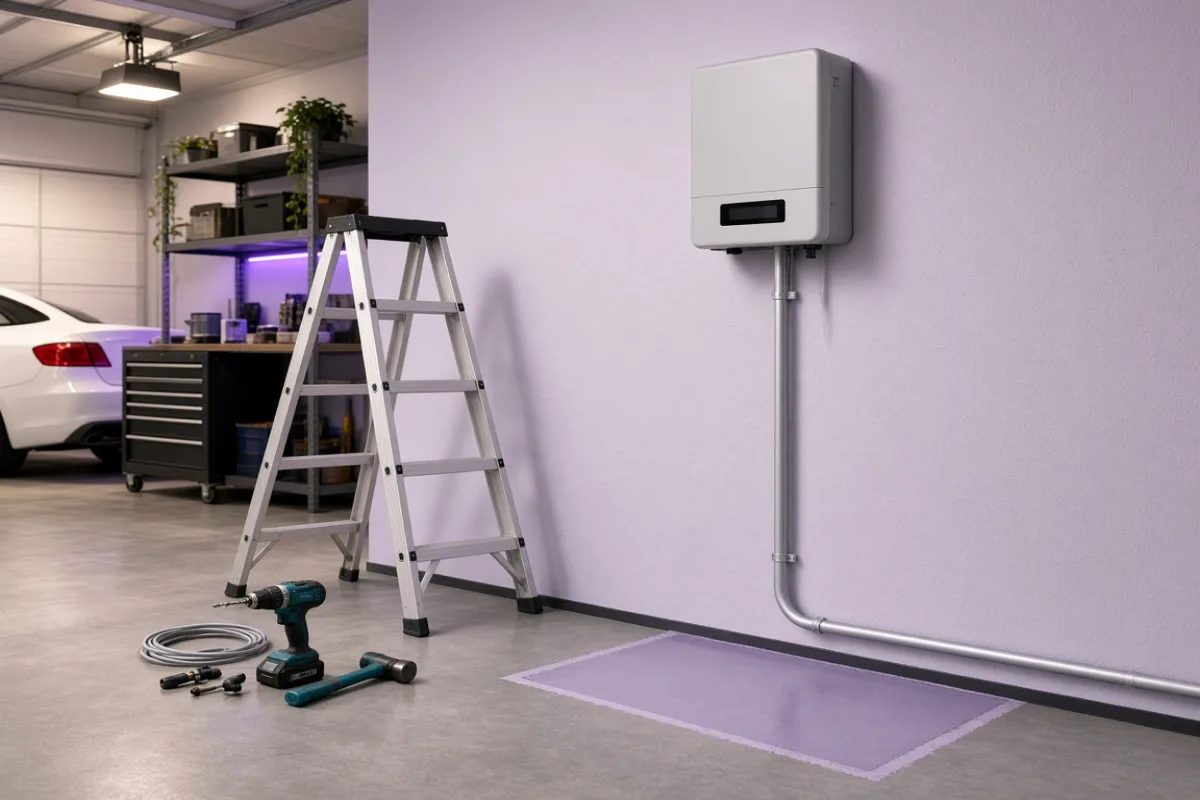
On a combined panel-and-battery job, the crew often marks a floor pad in the garage before the roof array is finished — not because the battery must live there, but because a long cable run to the inverter adds cost, inspection notes, and places where conduit cannot bend cleanly.
Why the First Walk-Through Matters More Than the Brochure Drawing
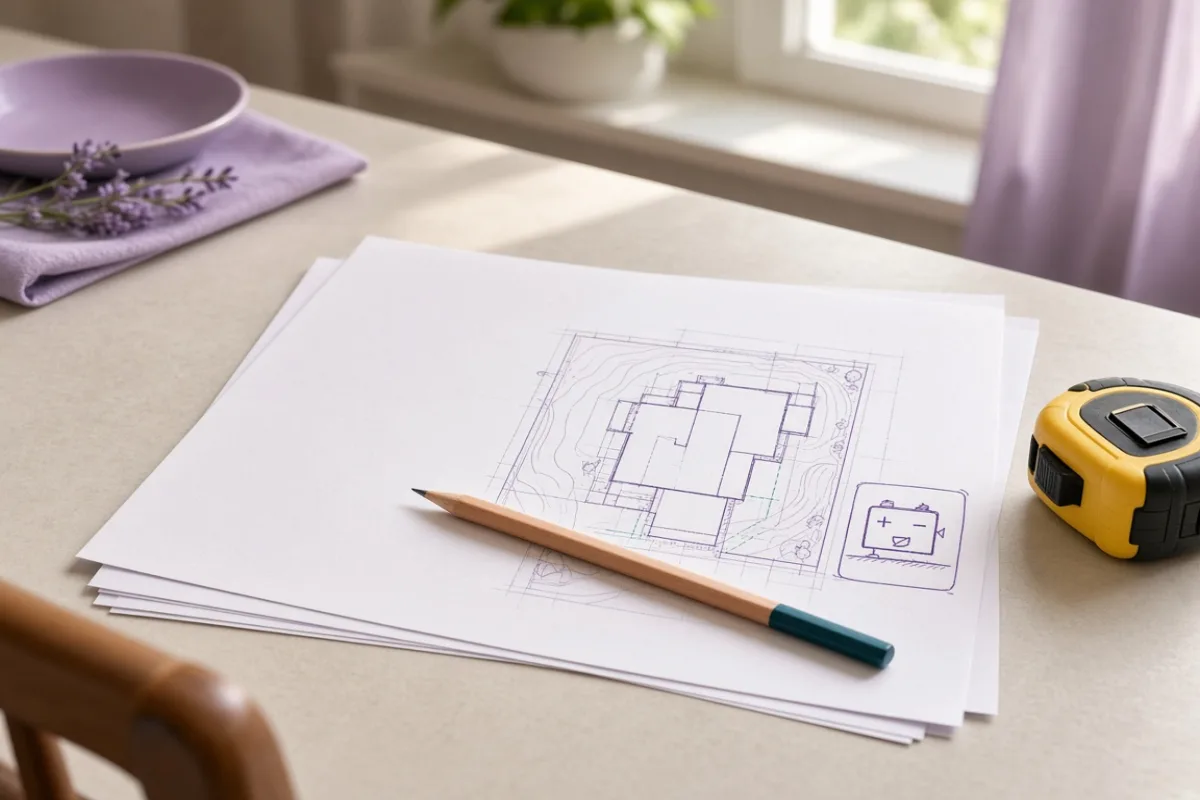
Proposal documents show a battery icon beside an inverter, but the usable wall in your garage may already hold a water heater, a chest freezer, or a sloped ceiling that blocks a tall cabinet. Installers carry a tape measure and a roll of painter's tape for a reason: they are mapping working clearance, not picking a pretty corner.
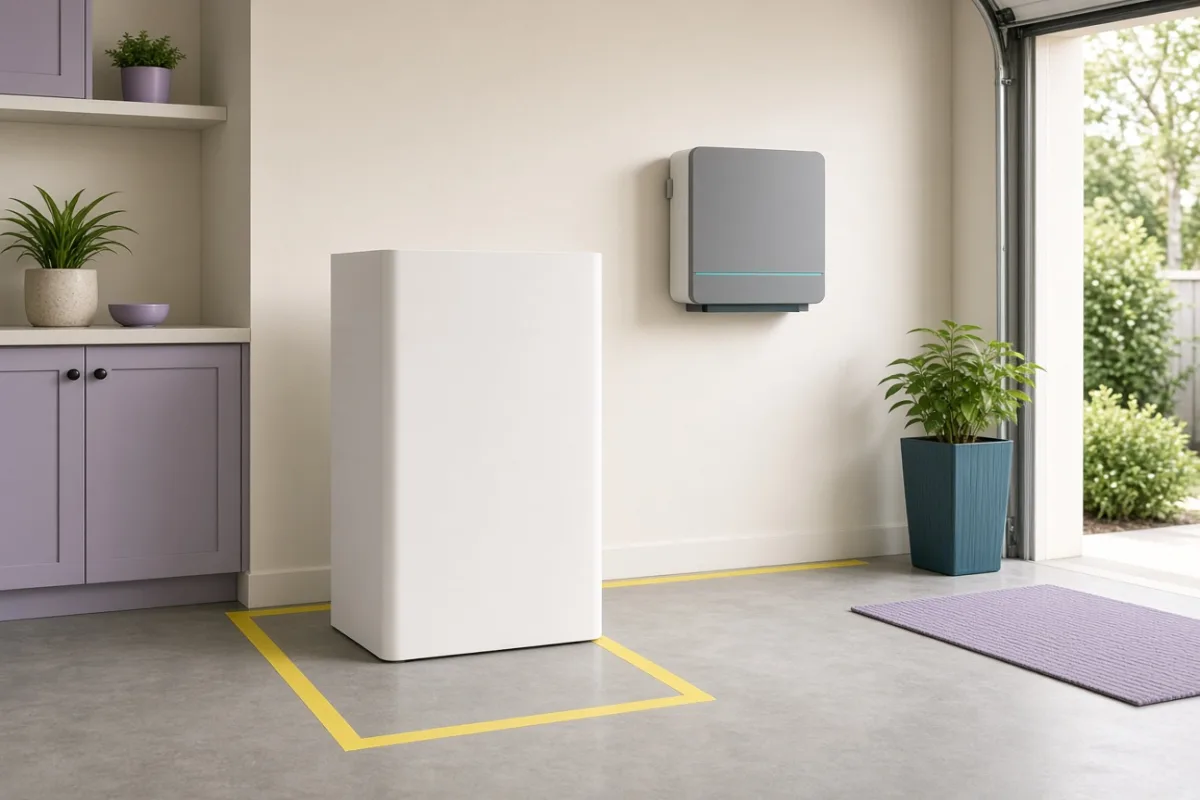
A floor-standing unit typically needs space in front for service access and side clearance for ventilation paths. Wall-mounted packs trade floor space for height limits — a detail that matters when your garage door track hangs lower than you remember.
Garage Floor Placement: When It Wins and When It Costs You Space
Garage corners near the main panel and inverter wall win often because the DC run stays short and the crew can keep conduit on one wall. You lose parking width, though, and anything stored on that wall has to move before inspection day.
- Concrete floor — crews check for level spots and whether a pad or stand is required by local code.
- Distance to the panel — longer runs mean larger conduit and more labor if the battery sits far away.
- Heat and sun — a west-facing garage door can raise ambient temperature on summer afternoons.
- Vehicle clearance — a cabinet placed too close to a parking spot gets bumped during normal use.
If your garage doubles as a workshop, floor placement can feel like giving up real estate. Some homeowners accept that trade; others push for a utility room and accept a longer wire run instead.
Basement and Utility Alcoves: Quiet, but Routing Gets Harder
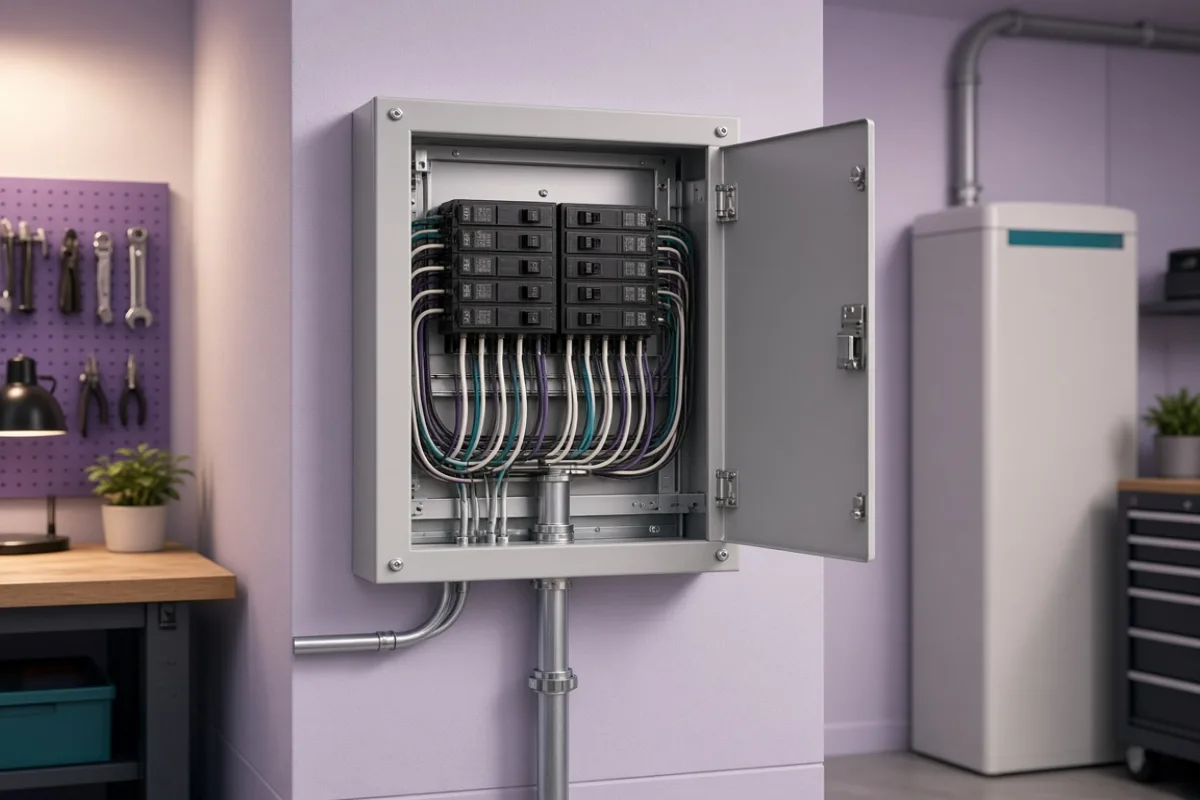
When the main electrical panel sits in a basement, an alcove beside it looks ideal on paper. Temperatures stay steadier, and the battery stays out of daily traffic. The catch is getting conduit from the roof array or exterior inverter down without tearing finished drywall on every floor in between.
Retrofit paths through closets or along exterior walls are common, but each bend adds labor and gives the inspector another place to look for unsupported runs. A basement spot that is perfect electrically can still lose if the only route passes through a finished living room you did not plan to open.
What Gets Measured Before Anyone Marks the Floor
Before a pad is taped out, crews usually confirm a short list of physical limits. Ask to walk through it with them — the numbers matter more than the marketing photo on the proposal.
- Cabinet height and depth with the service door fully open.
- Working clearance on three sides, including any local fire-separation rules.
- Path from battery to inverter with count of wall penetrations needed.
- Panel bus capacity and spare breaker spaces — placement does not fix an overloaded service.
- Future access — can a technician reach disconnects without moving stored items every visit?
The spot that looks obvious from the driveway is not always the spot that passes inspection. I have seen crews relocate a marked pad six inches because the original tape sat inside the required clearance zone for the cabinet door swing.
When the First Choice Fails
HOA rules, flood history, or a garage too narrow for code clearance push batteries to exterior walls or dedicated utility closets. Exterior placement adds weather-rated enclosures and sometimes a separate permit category. Interior closets work when ventilation is designed into the space — not when someone clears a shelf and hopes for the best.
If two locations seem equal, ask which one minimizes conduit on finished walls and which one your utility interconnection paperwork already lists. Mismatch between the permit drawing and the installed location is a common reason for a failed inspection that has nothing to do with the roof work quality.