What Changes in Your Electrical Panel When a Battery Is Added
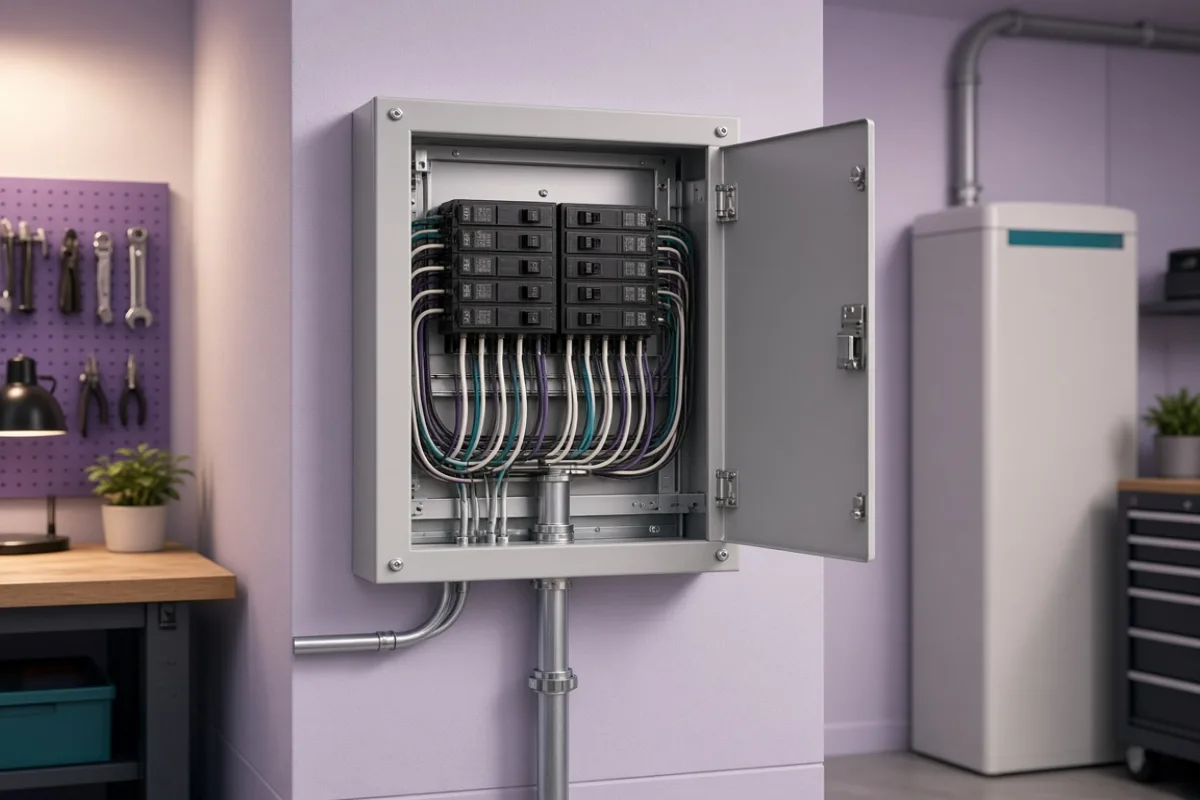
Open your panel after a battery install and you may see new breakers, a second panel mounted beside the main service, and handwritten labels that did not exist last week. Those changes are not cosmetic — they define which circuits stay powered during an outage and which equipment the inspector will photograph first.
The Main Panel Is Still the Hub — but It Is Busier
Storage systems tie into the same service entrance your utility meter feeds. That means at least one new breaker or fused disconnect often lands in the main panel, sized for the battery inverter or gateway connection. If the panel was already near its slot limit, the battery job becomes the reason someone finally talks about a service upgrade.
Empty spaces are not spare decoration. Inspectors expect room for future work and proper wire bending radius behind each device. A panel stuffed to the last slot before solar arrives leaves no clean path when storage shows up on the same contract.
Backup Gateway and the Critical-Loads Sub-Panel
Whole-home backup is possible on some systems, but many installs split circuits into a critical-loads sub-panel. During an outage, the gateway isolates the house from the grid and feeds only the breakers moved to that sub-panel — typically refrigeration, a few lights, a router, and sometimes a small HVAC circuit.
Choosing what moves is a tradeoff, not a checkbox exercise. A well pump on critical power keeps water flowing but draws heavily from a limited battery. Leaving the electric range off the list saves capacity but changes how you cook during an outage. The electrician maps loads in amps, not by room name alone.
Labels You Should See Before Inspection Day
- Main service rating on the dead front — still legible after new devices are added.
- Battery or gateway breaker marked with its function, not just “new.”
- Critical-loads panel directory listing each relocated circuit by room and appliance.
- PV or storage disconnect locations identified if required locally.
- Utility lockout or rapid-shutdown markings where interconnection rules apply.
Missing labels delay sign-off even when the wiring is correct. Homeowners can photograph the directory the night before inspection and catch blank spaces while the crew is still one phone call away.
Conduit Entries and Why They Cluster at the Top or Bottom
Battery-to-inverter runs usually enter the panel through a knockout, often near existing solar conduit. Multiple entries at the same height look tidy from the driveway but can crowd neutral bars and grounding buses inside. A neat exterior often hides a tight interior — ask whether you can see the grounding connection path, not just the cover screws.
If solar was installed years earlier, retrofit storage may add a second conduit run rather than reusing the original. Two paths mean two seal points and two places moisture can enter if bushings are skipped.
Inspectors rarely fail a job because the homeowner picked the wrong refrigerator circuit. They fail it because the critical-loads directory said “kitchen” for three different breakers and nobody could tell which one fed the fridge.
When the Panel Itself Has to Change
Older panels with known compatibility issues sometimes require replacement before storage is permitted. Even when the box stays, bus rating, main breaker size, and neutral capacity still matter. A load calculation that passed for panels alone can fail once a bidirectional inverter sits on the bus.
- Confirm spare breaker spaces or a planned sub-panel before signing the battery scope.
- Ask which circuits stay on the main panel versus the critical-loads list.
- Request photos of labeling and grounding before the cover goes back on.
- Compare the permit single-line diagram to what is physically landed in the box.
- Keep the directory updated if you later move breakers for a renovation.
What Stays the Same
Your utility meter still measures grid import and export. Standard branch circuits do not magically become smarter — they simply get re-homed when backup scope requires it. Maintenance also stays familiar: tripped breakers still reset at the panel, though you may now have two covers to check during an outage.
If anything in the panel looks burned, loose, or unlabeled after the job, treat that as unfinished work. The battery cabinet may get the attention during walk-through, but the inspector spends quiet minutes inside the service panel counting slots, reading labels, and tracing conduit. That is where the paperwork meets the wires.